

“Mapping Pluralist Research” report published

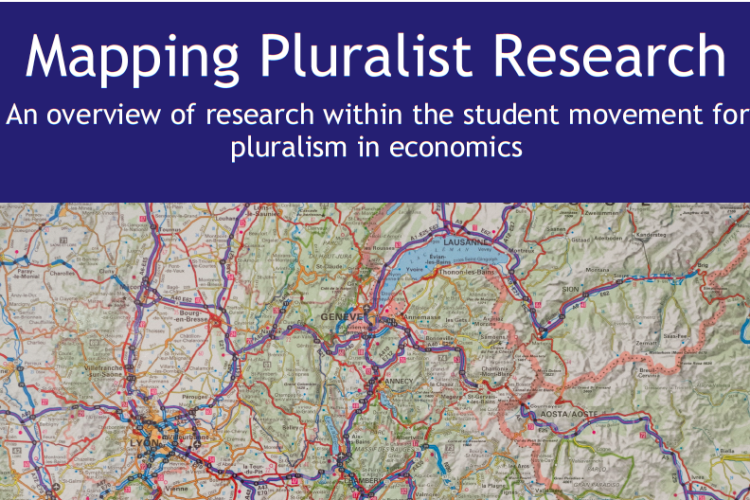
oikos International is excited to announce the publication of a new report on pluralist economics. This report, titled “Mapping Pluralist Research” provides an overview of the research which has come out of the student movement for pluralism in economics. Student organizations working to reform economics education have been very active recently, and this short document tries to put all our hard work in one place.

Mapping Pluralist Research was written by J.Christopher Proctor, the former oikos Associate in Pluralist Economics. If you’re still not sure what all this pluralism stuff is about, check out our oikos Guide to Pluralist Economics here.

You can download Mapping Pluralist Research here.

Author image

oikos International

posted March 12, 2019

This might be for you.

oikos Guide to Pluralist Economics translated to Italian

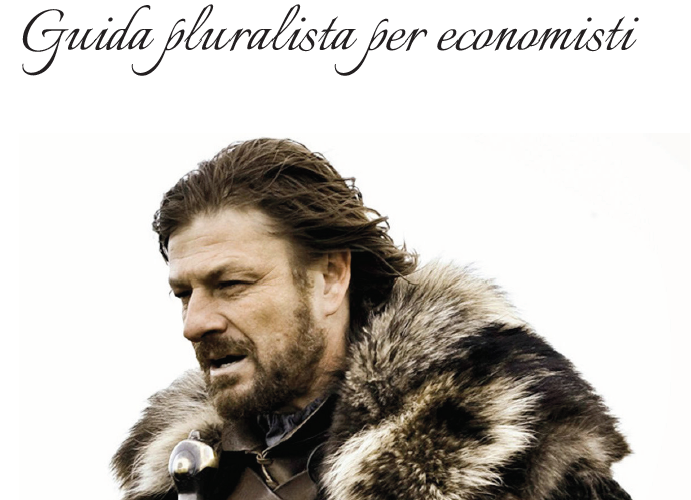
We are proud to announce that our oikos guide to pluralist economics is now available in Italian thanks to the hard work of the members of Rethinking Economics Italia.

The guide introduces readers to the wonderful world of pluralist economics, which envisions an economics where a diverse set of theories and methods are taught to students in the undergraduate education. It is a great tool for self or group study, and is used in an interactive workshop that helps students get into the shoes of different types of economists.

The guide was created last year by J.Christopher Proctor in his role as the oikos Associate. The translation was done by the members of Rethinking Economics Padova and Torino.

See the Italian version here.

You can access the English version of the guide here. To learn more about running the pluralist workshop, or if you’re interested in translating the guide into your language, contact J.Christopher at j.christopher.proctor@oikos-international.org

Author image

oikos International

posted February 7, 2019

This might be for you.

Sustainability International’s Alliance with ConsenSys – Leveraging Technology for Social Impact

Abstract

Social entrepreneur Chinyere Nnadi (Nnadi), Co-founder & CEO of Sustainability International (SI), had started his non-profit organisation to provide innovative solutions using technology to alleviate poverty in Africa. Since childhood Nnadi had beheld adversity in Nigeria that had been grappling with oil pollution due to decades of oil drilling and spills in the Niger Delta.  Nnadi observed that the environmental damages in Nigeria had resulted in the loss of livelihoods of farmers and fishermen, causing appalling public health hazards and mass unemployment. To end this misfortune, Nnadi’s SI team launched various projects ranging from infrastructure developments to providing education to girls and creating healthcare awareness. SI had also partnered with various government agencies, companies and NGOs and was using breakthrough technologies such as BIOCLEAN™ Biotechnology to restore the oil-contaminated sites. When Nnadi observed that widespread systematic corruption and distrusts among locals in Nigeria could hamper his initiatives, he started focusing more on utilising breakthrough technologies in his projects.  Towards this end, Nnadi’s SI collaborated with ‘Blockchain for Social Impact Coalition’, an initiative of the US based ConsenSys in mid-2017 to cleanup the Niger Delta and eventually improve the socio-economic condition of Nigeria. Would Nnadi be able to realise his dream of  alleviating corruption, poverty and improve the socio-economic condition of the region? Would SI be able to ‘solve the 20th century problems with 21st century solutions’ in Africa?

AuthorsShwetha Kumari
InstitutionAmity Research Centers, Bangalore, India
Competition Year2018
PlaceRunner Up
TrackSocial Entrepreneurship
Key WordsChinyere Nnadi, Africa’s Socio-economic condition, Niger Delta, Nigeria, Social entrepreneurship, Blockchain for Social impact , Oil pollution, BIOCLEAN, ConsenSys, Shell companies and NGOs, Environment and Economy, Oil spills and loss of livelihoods , One Farm, Virtual Reality Storytelling, Podcast Series – "Transitions, Development infrastructure
CoursesEthics and Social Responsibility
Target AudienceBusiness Management Students
Permission rightsThis case is part of the oikos free case collection. Download a free online copy below. If you are a faculty member and you are interested in teaching this case, you can request a free teaching note by sending us an email to freecase@oikos-international.org.
DownloadFree Case
Author image

oikos International

posted June 5, 2018

This might be for you.

Preserve: Growing a Sustainable Consumer Goods Company

Abstract

This case presents the startup and growth of Preserve, a sustainability-driven business and B Corp, in the circular economy. The company has grown over the years as a housewares and personal care consumer goods company in the retail industry with a closed loop business model on #5 plastics. With this operational model, Preserve managed to create social and commercial value by attaining strategic growth while meeting its social mission. To serve dual-purpose (social and commercial), Preserve helped its partners achieve sustainability goals, but these investments did not necessarily add to the financial bottom line and short-term growth of the company. The case focuses on the meaning of “growth” as the strategic intent for a sustainability-driven business. It explores to what extent a purpose-driven business like Preserve could meet the challenge of simultaneously being a social value leading business and keeping financial sustainability with the current business model.

The case examines Preserve’s founding mission and organizational values, and it discusses the tradeoff between social mission and economic goals any growth-driven sustainable company would face. It puts into perspective the importance of stakeholder collaboration and communication for sustainability and growth. The case introduces the framework of SEERS – Social, Environmental, Economic Responsibility and Sustainability – for evaluating Preserve’s sustainability strategy. The SEERS framework contains four elements: (1) identifying purpose and strategic intent, (2) engaging stakeholders, (3) developing metrics, and (4) implementing cascading innovations. It provides opportunities for considering strategic decision-making with respect to economic and social value generation and social responsibility.

AuthorsSinan Erzurumlu
InstitutionBabson College, USA
Competition Year2018
PlaceSecond Prize
TrackSocial Entrepreneurship
Key WordsSustainability, circular economy, closed loop, recycling, social and commercial value, blended value, Benefit corporation, B corporation, SEERS, corporate responsibility, start-up, entrepreneurship, operations management, household products, leadership, strategy
CoursesCorporate Strategy, Leadership and Strategic Management, Social Entrepreneurship, Social Innovations, Operations Management, Organizational Behavior, Sustainability, Business and the Environment, and Corporate Social Responsibility
Target AudienceMBAs, Undergrads, Executive Education
Permission rightsThis case will be published at the Case Centre shortly. You find an inspection copy for download below.
DownloadInspection Copy
Author image

oikos International

posted June 5, 2018

This might be for you.

oikos Guide to Pluralist Economics

Pluralist economics is the idea that the best way to understand the economy is to study a large number of competing theories. If you’ve studied economics in the past, this might sound like a pretty foreign concept. Economics is often taught as if it is a hard science, with strict rules that need to be followed if one is to come to the correct answer. Pluralist economists disagree with this vision of economics. Instead, they think that listening to and respecting a diverse set of voices is a sign of strength, not weakness.

This guide was created by oikos associate J.Christopher Proctor to give people a quick introduction to pluralist economics. For questions about pluralism, or to host a workshop on the topic, contact J.Christopher at j.christopher.proctor@oikos-international.org.

Download the guide here.

Author image

oikos International

posted February 9, 2018

This might be for you.

Pluralist economics: coming to a classroom near you?

Economics can be a pretty dull subject, both in the way it is presented and in the types of ideas it includes. But oikos is working to change that!

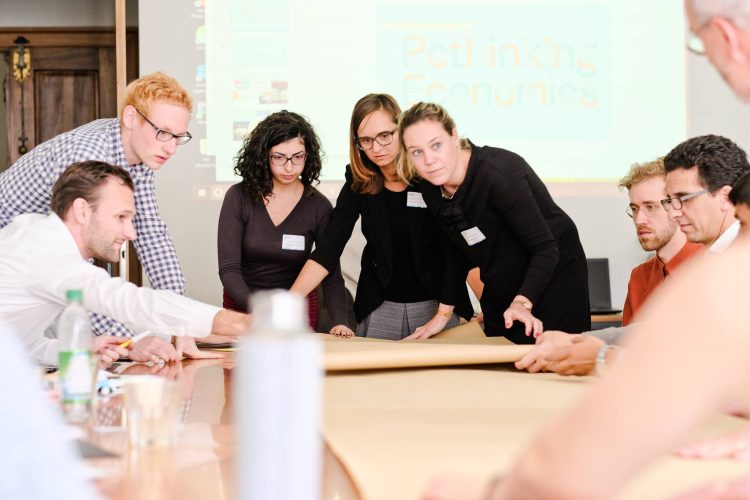
For last month’s Futurelab, oikos Associate J.Christopher Proctor led a team that developed an interactive workshop which introduced oikees to a new kind of economics. Using a number of engaging role playing games, the workshop asks participants to step into the shoes of various types of economists to make speeches, act out plays and even create ‘economic’ street art.

Participants come away from the workshop with a better understanding of economic approaches such as behavioral, ecological and feminist economics, and with an idea of what it looks like to study ‘pluralist economics’ in which diverse frameworks and ideas are taught alongside one another.

There is currently an active international student movement to promote pluralist economics, with groups like Rethinking Economics, PEPS-Economie, and the Netzwerk Plurale Ökonomik arguing that new ideas and critical debate are desperately needed in economics and business schools.

Now is your chance to introduce your local oikos group to the world of pluralist economics! In the coming months, J.Christopher will be taking his workshop on tour to try to reach as much of the oikos family as possible. He’ll also be holding webinar-workshops for groups he’s not able to visit in person.

If you’re interested in setting up an event, contact him at J.Christopher.Proctor@oikos-international.org. And if you’re interested in a more detailed introduction to pluralist economics, check out the new book he helped edit: Rethinking Economics: An introduction to pluralist economics (discount code FLR40 at checkout for 20% off).

Author image

oikos International

posted November 8, 2017

This might be for you.

Addressing sustainability and inequality at a global level : how other worlds (may) emerge

Increased global interconnectivity has encouraged a prevalence of forums that seek to organise and facilitate action on sustainability and inequality on a global scale. A body of work has examined such global forums and the theoretical contexts in which they operate but there is little which examines the nature of engagement through these forums to address issues of sustainability and inequality. This thesis explores social actors’ participation in two global forums, the World Economic Forum (WEF) and the World Social Forum (WSF), with the aim of creating more sustainable and equal worlds. It has been structured around four overarching research questions as follows. RQ1. What are the perceived relationships between dominant and dominated social actors in global sustainability debates? RQ2. How do different social actors perceive the global field as embodied by the two world forums? RQ3. How do different social actors perceive the struggle in the field, and the strategies adopted? RQ4. How do different social actors perceive the lasting impact of their own participation in the field? Using Bourdieu’s social theory, I propose that the research settings of WEF and WSF are enactments and representations of a global field of power (RQ1). In this global field of power, social actors use global capital, a form of symbolic capital, to define the doxa of the field, that is, the taken-for-granted assumptions about issues of sustainability and inequality that require response, how they are defined and how they should be resolved (RQ2). I discuss the tensions and dilemmas of social actors as they enact strategies within the field to promote conservation, succession and/or subversion of the doxa in relation to these issues of sustainability and inequality (RQ3). The nature and extent of shifts in the global field of power as perceived by social actors is shown, with the aim that such shifts will support the creation of other more sustainable and equal worlds (RQ4). The empirical material gives participant impressions of their own involvement, which has implications for the identities, roles and activities of global social actors.

Author image

oikos International

posted March 21, 2017

This might be for you.

How is the Economy Affecting Sustainability? Talk

oikos Barcelona organized a talk with Pedro Aznar, Josep Burgaya and Josep Domenech on how sustainability can affect the economy. Find the banner here.

Author image

oikos International

posted August 19, 2016

This might be for you.

Economic Evaluation of the Environmental Impact of Shipping from the Perspective of CO2 Emissions

In this research we evaluate the environmental economic impact of shipping from the perspective of CO2 emissions by implementing Marine Emission Trading Scheme (METS), as defined. This trading scheme is based on the EU Emissions Trading System (EU-ETS) program with adjustments for the shipping industry’s needs.
First, we evaluate the socio-economic cost of carbon emissions from seaborne trade activity per borne ton and per consumed ton fuel in both Business as Usual (BAU) and METS state. Then we continue to evaluate the relative socio-economic effect with regional segmentation, transportation mode, and the expected effect on the shipping industry from both the economic and environmental perspective.

The METS economic model is calibrated with the Fuel Consumption data (FC), forecasted FC growth rate (based on the proportion between FC growth rate and global trade growth rate), forecasted emission abatement rate (based on EU-ETS actual performance) and Emission Unit Allowance (EUA) prices. This generates an economic evaluation based on multiple CO2 emission scenarios, allowing us to estimate the socio-economic impact on the environment from seaborne trade activity per borne ton criteria and per consumed ton fuel criteria in BAU State and METS State.

The research shows that METS is effective, for an annual reduction rate of 7% or more, but its efficiency is dependent upon the low growth rate of fuel demand.
International shipping, in a state of BAU, is expected to increase its economic environmental influence by 356% from 2007 to 2030, with the maximum increase of CO2 emissions estimated at 324%. In contrast, implementation of METS is expected to decrease CO2 emissions between 54% and 93% with the maximum emission growth rate at 207%, and the minimum emission growth rate at 110%. In relation to the BAU state and the external costs per ton of fuel consumed under BAU is expected to grow by 16%, although with the expected rise in fuel prices this rate could decrease to 5%.
We found that under METS regulation this rate would grow only by up to 10% and decrease up to 4%. In addition, we found that calculations of external cost per transported ton are likely to create an imbalance between payments and actual contribution to the pollution problem.
To conclude, the current sea freight tariff system does not account for the external costs of CO2 emissions, and therefore we suggest that International Maritime Organization (IMO), must take charge, lead and coordinate an international program of emission trade, that could achieve effective reductions with minimum impact on business activity

Author image

oikos International

posted July 26, 2016

This might be for you.

The value of skills training in the improvement of the socio-economic status of microfinance beneficiaries

The research paper examined the value of skills training on the socio-economic profiles of beneficiaries of microfinance in the Northern Region of Ghana. The main interest of the study was to look into how skills training combine with microfinance enhances beneficiaries’ ability to cater for the education of their dependents, improves their ability to afford health care for their families, and to acquire more household assets as well as enhancing their empowerment.
The study adopted both qualitative and quantitative research designs drawing into both primary and secondary data. The research instruments used to gather data from sampled beneficiaries were interviewer administered questionnaires and focus group discussions. A purposeful random sampling technique was used to draw a total of 107 respondents from the clients of Grameen Ghana. The sample consisting of 82 beneficiaries enrolled into skills training and 25 beneficiaries without skills training from the same organization. A total of six (6) focus group discussions were held; four (4) with groups receiving skills training and two (2) with groups without skills training. The models used for the analysis of the data included descriptive statistics, regression, and paired sample t-test.
The outcomes of the research revealed that skills training complements microfinance services to improve the socio-economic status of beneficiaries, in relation to the education of their dependents, their family access to health care and empowerment. Conversely, the study has found that skills training have no influence on the household acquisition of assets.

Author image

oikos International

posted July 18, 2016

This might be for you.