

ecostore – the Carbon CaptureTM Pak decision

Abstract

ecostore – manufacturer of household and personal cleaning products is a New Zealand based company with a strong drive towards innovation and improvements into effectiveness of its products. This case captures ecostore’s journey to introduce a new technology – green packaging made from sugar cane (carbon captureTM pak) and examines the difficulties surrounding its adoption. The technology is its early stages of its development and market acceptance.

In the case, students are guided to evaluate company values, culture, underlying philosophies, and business aspirations before evaluating the decision. The case portraits ecostore’s unique business philosophy and commitment to avoid using commonly accepted chemicals normally deemed as safe by the industry in their formulas and to stay true to their precautionary principle to avoid using any chemical where no impact on health can be determined. After this consideration, the case introduces a new idea for ecostore: to implement a sugar cane based plastic for their product portfolio. This new technology could set the firm apart from the other firms that operate in an environmentally responsible manner and can cause disrupt into packaging market. ecostore is about to choose from three potential partners and the decision presents a significant challenge to a firm and its operations. However, if successful, the technology can change the demand and nature of packaging of the entire industry and ecostore can become a potential partner for other businesses who will pursue the implementation of this technology.

The case enables students to better understand challenges of pursuing innovation in a context of an established business and invites discussion on environmental practices, processes associated with innovation, scrutinizes the information asymmetry between chemicals used in household and personal cleaning industry, and makes students to evaluate possible partners to implement the new technology. Furthermore, the case presents major producers of sugar based plastic and outlines benefits and challenges associated whilst partnering with one of them. Students are guided to make a decision based on information provided in the case and additional research. The teaching notes reveal the final ecostore’s decision.

AuthorsMichaela Balzarova & Pavel Castka
InstitutionUniversity of Canterbury, New Zealand
Competition Year2018
PlaceRunner Up
TrackCorporate Sustainability
Key WordsGreen plastic, Bio-sourced plastic, Strategy, Decision-making process
CoursesStrategic management, Sustainable business, Sustainable enterprise
Target Audienceundergraduates, executive MBAs
Permission rightsThis case is part of the oikos free case collection. Download a free online copy below. If you are a faculty member and you are interested in teaching this case, you can request a free teaching note by sending us an email to freecase@oikos-international.org.
DownloadFree Case
Author image

oikos International

posted June 5, 2018

This might be for you.

Volkswagen’s Emissions Scandal: How Could It Happen?

Abstract:
The case is a detailed ‘inside’ account of the ‘dieselgate’ scandal at Volkswagen which revealed how engineers had programmed software that enabled its cars to cheat emissions tests. It explores the origins of internal and external forces that propelled the company to market environmentally sustainable “clean diesel” cars while using engine management software to conceal on-the-road emissions of over 40 times the permitted levels. The scandal – one of the biggest of the decade – illustrates contributing factors that are common to many instances of organizational misconduct: obedience to authority, organizational culture, goal-setting, and corporate governance.

AuthorsN. Craig Smith & Erin McCormick
InstitutionINSEAD, France
Competition Year2018
PlaceSecond Prize
TrackCorporate Sustainability
Key WordsEnvironmental Responsibility, Organizational Misconduct, Vehicle Emissions, Sustainability, Corporate Social Responsibility, Business Ethics, Organizational Culture, Leadership, Green Marketing, Volkswagen, Automotive Industry, Pollution, Fraud Triangle, Crisis Management
CoursesCorporate Sustainability, Corporate Social Responsibility and Business Ethics, Management, Green Marketing, Corporate Governance, Automotive Industry
Target AudienceMBAs, Upper-level undergraduates, Executive education
Permission rightsPlease contact at: case.studies@insead.edu
DownloadInspection Copy
Author image

oikos International

posted June 5, 2018

This might be for you.

oikos Welcomes a New Alumni Ambassador to the Netherlands

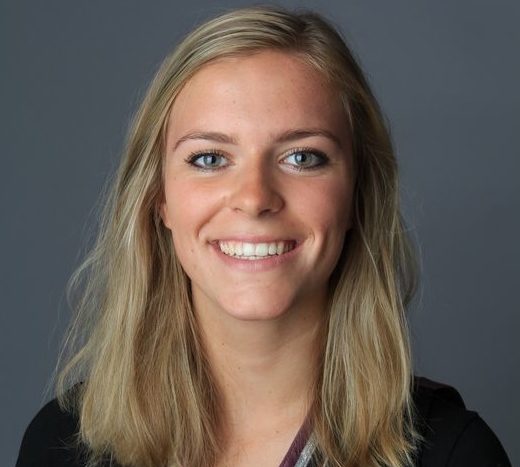
Carlijn van Dam, oikos Paris alumna, joined our network of alumni Ambassadors. Carlijn will engage with our alumni in the Netherlands, as she will be working to strengthen ties and facilitate new connections between the Dutch chapters, their members, and alumni.

Carlijn shared her story with us:

“My name is Carlijn van Dam. I am 24 and I am from the Netherlands. After doing a bachelor degree in Psychology in Amsterdam, I went to Paris to pursue a master’s in Economics & Psychology. During this program in behavioral economics, I got highly interested in pro-environmental behavior change and wrote my thesis on this subject as well.

During the second year, I found out about oikos and immediately felt a great alignment with its vision. As the chapter was no longer active in Paris, I decided to revive it. Together with 4 amazing and motivated girls, we revitalize the Paris chapter! My favorite oikos memory is the Spring Meeting in Hamburg. It was an inspiring weekend where we received a lot of positive feedback and encouragement from all the other chapters.

After returning back to the Netherlands, I completed an internship at Tony’s Chocolonely – a social enterprise in the Netherlands – researching the French market. Currently, I work as a sustainability consultant at KPMG in Amstelveen (NL).

The open learning environment in oikos, which enables you to discover new insights, broaden or deepen your interests and obtain different perspectives through sharing, motivates me to promote this exchange actively, as an alumni ambassador, both within oikos in the Netherlands, as well as internationally between oikos Netherlands and countries such as France. I strive to help and support others as I, myself, have been supported by other driven oikees within the oikos community!

If you are an oikos alumnus or alumna in the Netherlands, (or just want to share your thoughts, questions or oikos experience, please don’t hesitate to) e-mail me!

Author image

oikos International

posted June 5, 2018

This might be for you.

Eliminating Modern Slavery from Supply Chains: Can Nestlé Lead the Way?

Abstract

The case discusses the global food processing giant Nestlé’s problems relating to modern slavery in its cocoa supply chain. The company faced allegations of using child labor in its cocoa supply chain in Ivory Coast and was also accused of failing to disclose this to customers at the point of sale. Some critics argued that Nestlé was not doing enough and was not being transparent enough in its efforts to eliminate child labor within its global cocoa supply chain. However, in a rare disclosure, Nestlé reported in 2015 that it had uncovered forced labor in its seafood supply chain in Thailand. Magdi Batato  (Batato) Executive Vice President and Head of Operations  at Nestlé  said that the company was committed to preventing and eliminating child labor in its supply chain. Analysts wondered whether Nestlé’s admission of slavery was honest or was just an attempt to fend off child labor allegations in other parts of its business and bring consumers onside.

The case explores how modern slavery is a complex supply chain issue for Nestlé and why it needs to be addressed. Though Nestlé had implemented an action plan to combat slavery within its supply chain, the obnoxious practice still permeated West African cocoa farms, and was in fact on the rise. Nestlé had tried to maintain ethical and environmental standards within its supply chain but how well these initiatives matched up to the challenges of modern slavery was still questioned by its critics. According to them child labor in Nestlé‘s cocoa supply chain was a complex issue and gathering reliable evidence about what was happening on the ground would not only be  vital, but also challenging for Batato. Given its global scale and influence, can Nestlé play a crucial role in eliminating slavery from the global cocoa supply chain? Can Batato lead the company’s ongoing commitment to tackle slavery? Can its commitment go far enough to enact change and put an end to modern slavery in the global cocoa industry? How?

This case is meant for MBA students as a part of their Corporate Sustainability/ Corporate Social Responsibility/ Business Ethics curriculum. It can also be used in the Operations Management/ Supply Chain Management curriculum. This case is designed to enable students to: 1) Understand the concept of modern slavery, its various forms, and the need for companies to address this issue; 2) Understand the relationship between modern slavery and CSR; 3) Identify the barriers to eliminating modern slavery; 4)  Evaluate the actions taken by Nestlé’s to combat slavery in its supply chains and identify the challenges faced by the company in dealing with the issue; 5) Explore ways through which Nestlé can eliminate modern slavery from its cocoa supply chain.

AuthorsSyeda Maseeha Qumer & Debapratim Purkayastha
InstitutionICFAI Business School, Hyderabad, India
Competition Year2018
PlaceFirst Prize
TrackCorporate Sustainability
Key WordsModern Slavery, Corporate Social Responsibility, Human rights, Sustainability, Carroll’s Pyramid of CSR, Managing change, Ethical supply chain, Supply chain mapping, Supply chain audit
CoursesCorporate Social Responsibility, Business Ethics, Supply Chain Management
Target AudienceMBAs
Permission rightsThis case will be published at the Case Centre shortly. You find an inspection copy for download below.
DownloadInspection Copy
Author image

oikos International

posted June 4, 2018

This might be for you.

Dr. Marshall Goldsmith led the LEAP Advanced Webinar on Creating Behavior that Lasts

Dr. Marshall Goldsmith, world renowned  business educator and coach, led the last LEAP Advanced webinar that focused on the topic of Creating Behavior that Lasts.

Marshall engaged LEAP Advanced participants with his wit and lighthearted demeanor. But he also warned the webinar attendees: everything he was going to say would be easy to grasp, but a lot harder to accomplish. “Our challenge in life is not understanding, our challenge is doing” – noted Dr. Marshall.

He spoke about challenges successful leaders face and urged LEAP Advanced millenials to ask, listen, think, thank, respond, involve, change, and follow up in order to become better leaders and coaches. Dr. Marshall emphasized that coach’s efforts were just as good as the person’s willingness to change and become better.

As the webinar came to an end, Marshall shared his advice with the youth:

  • Life is short, have fun!
  • Do whatever you can do to help people
  • Go for it: we do not regret the risk we take and fail, we regret the risk we failed to take

A thought from the webinar

Marshall shared 6 questions that make difference every day:

Did I do my best to set my goals? to make progress towards achieving my goals? To find meaning in what I am doing? to be happy? to build positive relationships? And to be fully engaged?

About the Speaker

Marshall’s professional acknowledgments include:

  • Harvard Business Review and Best Practices Institute – World’s #1 Leadership Thinker,
  • Global Gurus, INC and Fast Company magazines – World’s #1 Executive Coach,
  • Institute for Management Studies – Lifetime Achievement Award for Excellence in Teaching,
  • American Management Association – 50 great thinkers and leaders who have influenced the field of management over the past 80 years,
  • BusinessWeek – 50 great leaders in America,
  • Wall Street Journal – top ten executive educators, Economist (UK) – most credible executive advisors in the new era of business,
  • National Academy of Human Resources – Fellow of the Academy (America’s top HR award),
  • World HRD Congress (India) – global leader in HR thinking.

His work has been recognized by almost every professional organization in his field.

Look at his biography here: http://www.marshallgoldsmith.com/about/

Author image

oikos International

posted June 4, 2018

This might be for you.